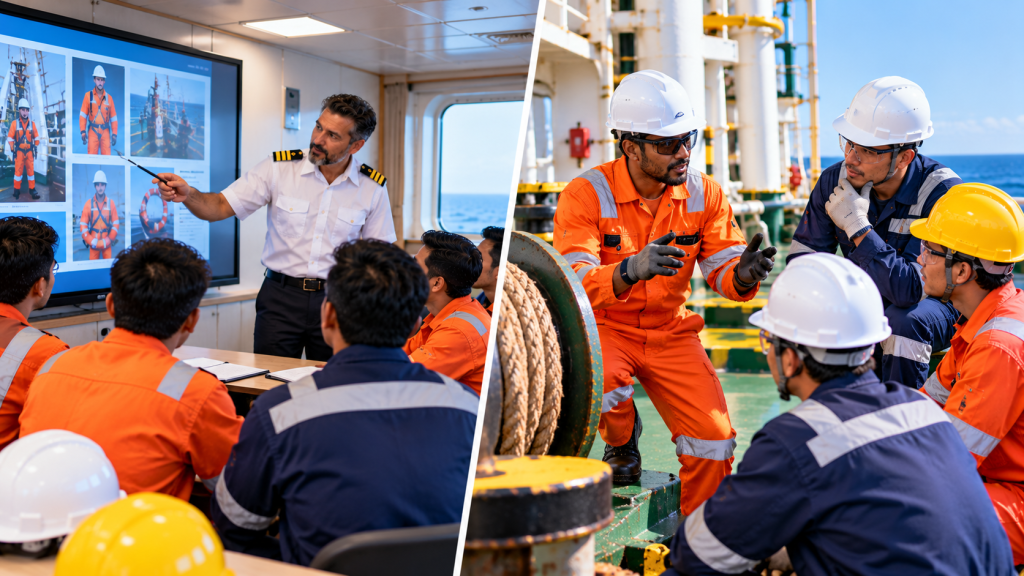
Behavioural Safety vs Traditional Safety Training in Maritime Operations
Safety training is a fundamental part of maritime operations. Seafarers need the knowledge and skills to identify hazards, follow procedures,



Safety training is a fundamental part of maritime operations. Seafarers need the knowledge and skills to identify hazards, follow procedures,
Safety in the maritime industry is often associated with physical hazards such as machinery, fire, cargo operations, navigation risks, slips,
Life at sea offers unique career opportunities, but it also comes with physical, emotional, and social challenges. Seafarers may spend
The maritime industry depends on skilled and resilient seafarers who work in challenging environments, often spending weeks or months away
Safety is one of the most important priorities in the maritime industry, but achieving safe operations requires more than advanced
The maritime industry depends on capable leaders who can make sound decisions, manage teams, and maintain safe and efficient vessel
Safety is a fundamental priority for every shipping company. Vessels operate in complex environments where weather conditions, machinery, navigation, cargo
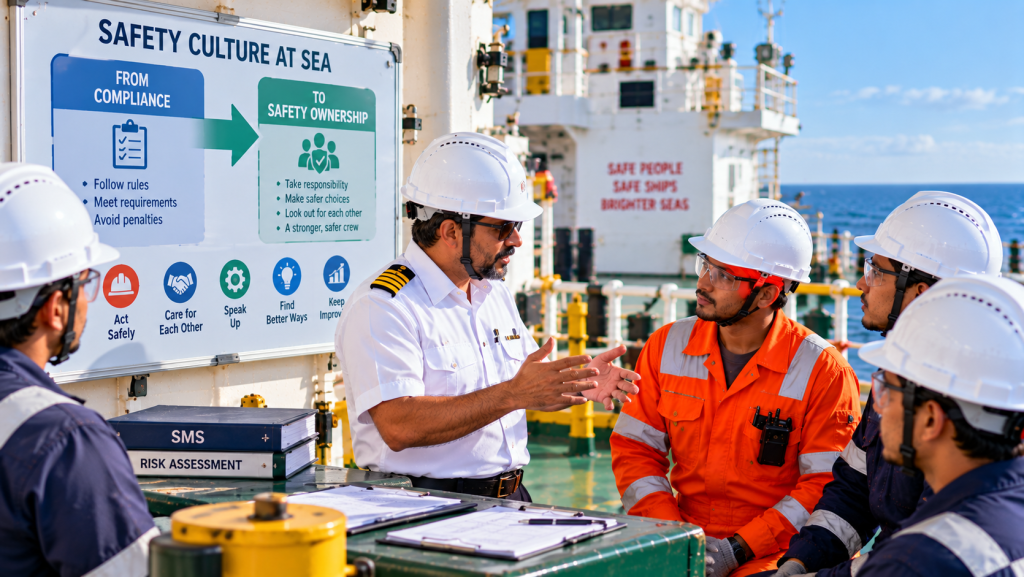
Safety is one of the most important priorities in the maritime industry. Ships operate in complex and challenging environments where
The maritime industry depends on skilled, confident, and well-coordinated crews to maintain safe and efficient vessel operations. As ships become
The maritime industry is undergoing rapid digital transformation, and training is becoming an important part of this change. Seafarers need