

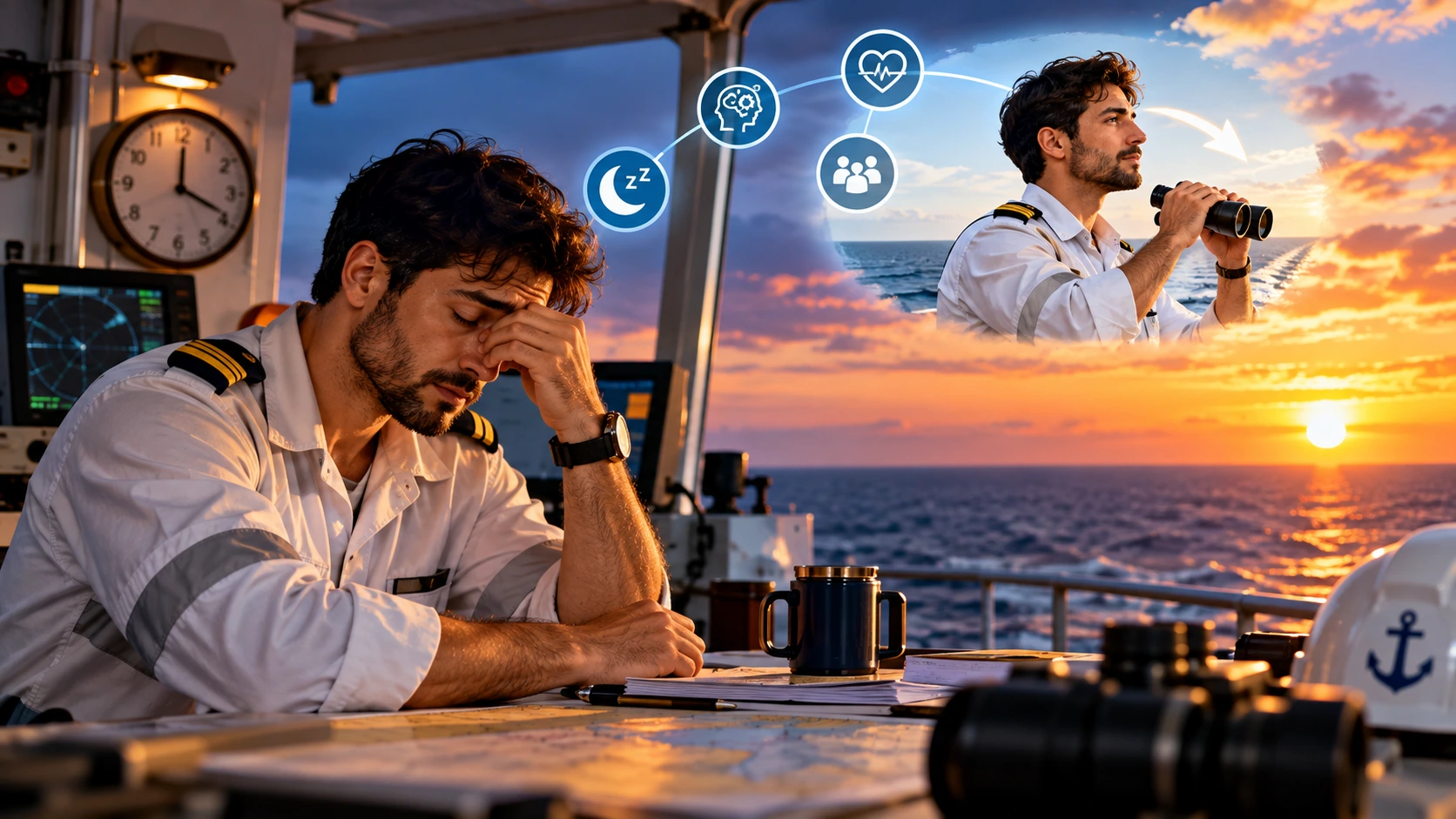
Why Fatigue Management Matters at Sea
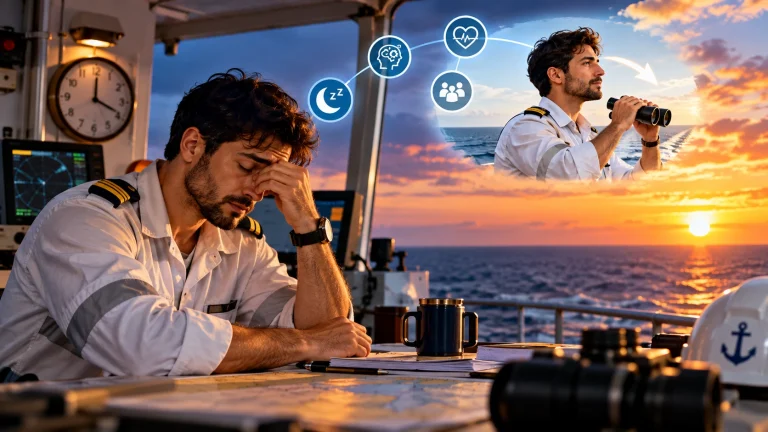
Maritime operations require crews to work across different schedules, environments and operational demands. Watchkeeping, night operations, changing workloads, long voyages and demanding situations can make fatigue management an important part of crew safety and performance.
What Is Seafarer Fatigue?
Seafarer fatigue refers to a state of reduced physical or mental capability that can affect a person's ability to perform tasks safely and effectively.
Fatigue can develop because of insufficient or disrupted sleep, demanding work schedules, extended periods of wakefulness, stressful conditions, environmental factors and other operational demands.
In maritime environments, fatigue management is therefore closely connected with human factors, watchkeeping, crew wellbeing, communication and operational safety.
Fatigue management should not be treated as an individual responsibility alone. Effective management involves the crew, onboard leadership, shore-based management, work planning and organisational safety systems.
Common Causes of Fatigue Among Seafarers
Understanding potential causes can help maritime organisations identify where fatigue risks may arise during normal operations.
Irregular Watchkeeping
Rotating schedules and night watches can affect normal sleep patterns and make consistent rest more difficult.
Insufficient Rest
Limited opportunities for adequate recovery can reduce alertness and affect performance during demanding tasks.
Heavy Workload
Periods of increased workload, maintenance activity or operational pressure can increase fatigue risk.
Stress & Mental Pressure
Stress, demanding responsibilities and prolonged operational pressure can contribute to mental and physical fatigue.
Long Periods at Sea
Extended time away from normal routines and familiar environments can affect sleep, recovery and overall wellbeing.
Environmental Conditions
Noise, vibration, temperature and other onboard conditions can influence sleep quality and recovery.
Fatigue Can Affect More Than Physical Energy
Fatigue can influence attention, reaction, concentration, communication, judgement and decision-making.
For this reason, fatigue management should be considered part of broader maritime human-factors and safety training rather than simply a personal wellbeing topic.
Leaders can help by identifying fatigue risks, encouraging open communication and integrating fatigue considerations into operational planning.
MANAGEMENT
Signs That a Seafarer May Be Experiencing Fatigue
Recognising possible warning signs can help teams identify situations that may require attention.
Reduced Concentration
Difficulty maintaining attention or staying focused on routine operational tasks.
Slower Responses
Tasks or decisions may take longer when alertness is reduced.
Communication Problems
Tiredness may make it harder to communicate clearly or process information effectively.
Increased Irritability
Fatigue can influence mood and interpersonal interactions within the crew.
What Does Fatigue Management Training for Seafarers Cover?
A practical fatigue management programme can help crews understand fatigue risks and develop safer habits and responses.
Understanding Fatigue
Introduce the causes, effects and operational implications of fatigue in maritime environments.
Sleep & Recovery
Help crew members understand the importance of sleep, rest and recovery within demanding schedules.
Fatigue Risk Recognition
Teach crews how to identify situations and behaviours that may indicate increased fatigue risk.
Operational Decision-Making
Connect fatigue awareness with communication, decision-making and human performance.
Leadership & Communication
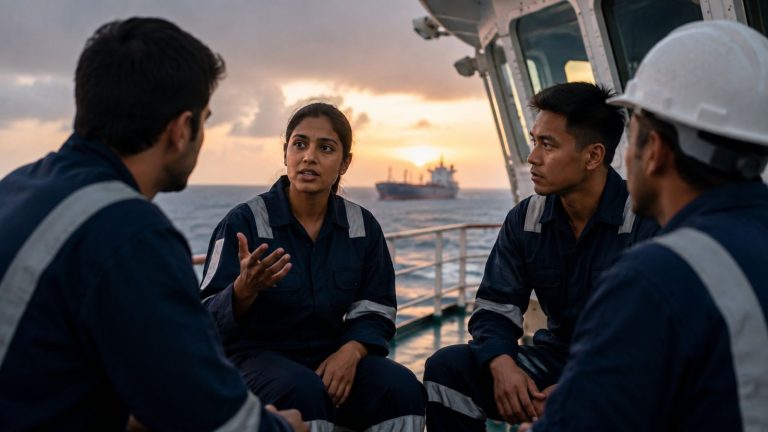
Develop leadership practices that encourage crew members to raise fatigue-related concerns.
Practical Strategies
Provide practical approaches for managing fatigue risks during demanding operational periods.
A Simple Fatigue Management Approach for Maritime Teams
Fatigue management works best when it is treated as an ongoing process rather than a one-time training topic.
Identify
Identify fatigue risks and demanding operational periods.
Assess
Assess how fatigue could affect crew performance.
Manage
Apply appropriate work, rest and operational strategies.
Communicate
Encourage crew members to report relevant concerns.
Review
Learn from fatigue-related events and improve practices.
The Role of Maritime Leaders in Fatigue Management
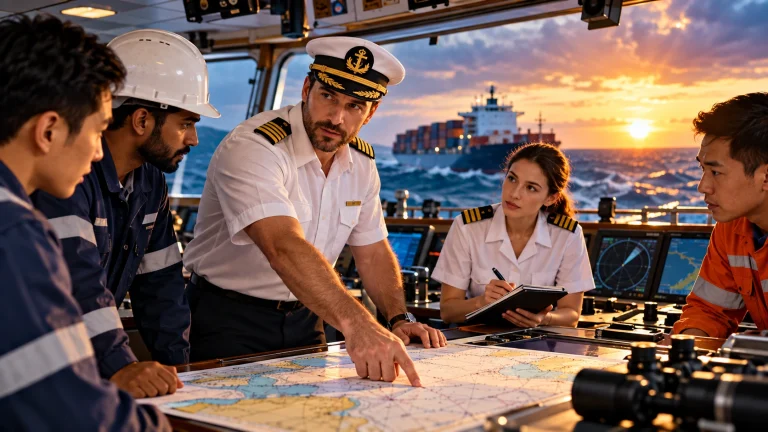
Fatigue management is not only the responsibility of individual seafarers. Maritime leaders play an important role in creating an environment where fatigue concerns can be communicated and addressed.
Officers and supervisors can monitor workload, communicate expectations, recognise possible signs of fatigue and encourage crew members to raise concerns when appropriate.
Strong leadership can also connect fatigue management with broader maritime leadership training and human factors training .
Effective fatigue management is not simply about working less. It is about understanding fatigue risks and managing them as part of safe and sustainable maritime operations.
How Fatigue Can Influence Maritime Performance
| Area | Possible Effect of Fatigue | Training Focus |
|---|---|---|
| Attention | Difficulty maintaining focus | Fatigue awareness and recovery |
| Decision-Making | Reduced ability to process information effectively | Human factors and decision-making |
| Communication | Difficulty processing or communicating information | Clear communication practices |
| Teamwork | Increased interpersonal tension | Teamwork and leadership |
| Operational Performance | Reduced alertness during demanding tasks | Fatigue risk management |
Seafarer Fatigue Management Checklist
Maritime teams can use these questions as a simple discussion and awareness checklist.
Why Shipping Companies Should Invest in Fatigue Management Training
Fatigue management training can help shipping companies build greater awareness of human performance risks across their crews.
Instead of treating fatigue only as an individual issue, organisations can integrate fatigue awareness into leadership development, safety culture, human factors, communication and broader crew development programmes.
A structured training approach can also help create a common language for discussing fatigue and performance across shipboard and shore-based teams.
Fatigue Management Training for Seafarers – FAQs
What is fatigue management training for seafarers?
Fatigue management training teaches seafarers and maritime leaders how to understand fatigue, recognise fatigue risks, support appropriate rest and recovery, and manage factors that may affect safety and performance.
Why is fatigue management important for seafarers?
Fatigue can affect attention, communication, decision-making and overall human performance. Fatigue management helps maritime teams identify and manage these risks as part of safer operations.
What causes fatigue among seafarers?
Potential contributors include disrupted sleep, demanding watchkeeping schedules, heavy workloads, stress, long periods at sea and environmental conditions that affect rest and recovery.
What does maritime fatigue management training cover?
Training can cover fatigue awareness, sleep and recovery, fatigue risk recognition, human factors, communication, leadership, decision-making and practical fatigue management strategies.
How can maritime leaders help manage crew fatigue?
Leaders can help by recognising fatigue risks, communicating clearly about workloads, encouraging crew members to raise concerns and integrating fatigue awareness into operational and crew management practices.
How does fatigue affect maritime safety?
Fatigue can influence attention, alertness, communication, information processing and decision-making. Managing fatigue is therefore an important part of human performance and maritime safety management.
Build Safer, More Resilient Maritime Crews
Help your maritime teams understand fatigue, strengthen human performance and develop practical skills for safer operations.
Explore Strive High's maritime training and crew development solutions.
Explore Maritime Training →