



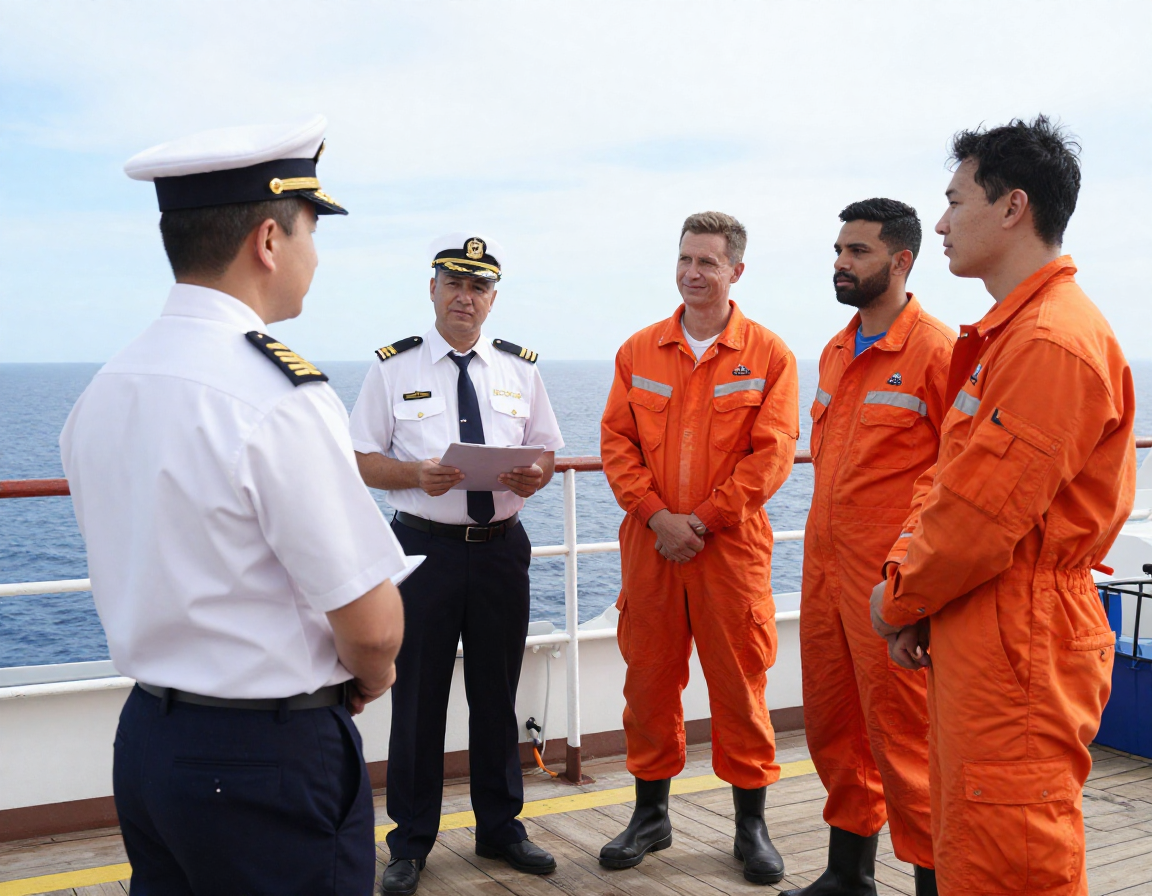
PEOPLE AT THE CENTRE OF MARITIME CHANGE
Most seafarers don’t struggle with storms. They struggle with hesitation.
A moment before speaking.
A question left unasked.
Fatigue carried quietly through another watch.
Ships are built with precision, governed by procedures, and operated with discipline. Yet one of the most influential risks at sea remains invisible — silence shaped by hierarchy, culture, and emotional endurance.
This February arrived without disruption. Voyages continue, routines stabilise, and responsibilities remain constant. But beneath this steady rhythm, this month has highlighted a quiet transformation in the maritime industry— one that places people, not just policy, at the centre of safety.
“Silence is one of the quietest risks at sea.”
This quiet reality is not isolated to individual ships. Across the maritime industry, a broader conversation is emerging — one that recognises that safety and performance cannot be separated from the human experience onboard. What was once viewed primarily through operational metrics is increasingly being understood through behaviour, communication, and wellbeing.
An Industry Changing — And the Human Experience Within It
Across the maritime world, conversations are expanding beyond compliance and efficiency. Milestones around seafarer welfare, concerns about abandonment, and pressures from environmental transitions all point toward a shared reality:
The future of shipping will be shaped not only by innovation and regulation, but by human resilience, communication, and trust.
For seafarers, this shift is not dramatic. It is experienced in everyday moments — how leaders respond to concerns, how crew members interpret authority, and how wellbeing is acknowledged within operational routines.
“Operational reliability grows where people feel safe to speak.”
One of the clearest reflections of this evolving mindset can be seen in the milestones shaping maritime policy and welfare frameworks. These developments highlight how the industry’s understanding of safety has expanded beyond compliance toward lived shipboard experience.
This month also marks a significant milestone for the maritime community, as the Maritime Labour Convention (MLC) reaches 20 years since its adoption. Often described as the “seafarers’ bill of rights,” the MLC has played a pivotal role in shaping working and living conditions at sea. Its anniversary serves as a reminder that welfare is not a peripheral concern, but a foundation of safe and sustainable maritime operations.
“Decent work at sea is not an aspiration — it is a standard.”
While industry discussions often occur in conference rooms and policy documents, their true impact is experienced in quiet moments onboard — moments that rarely make headlines but shape decision-making, confidence, and safety in profound ways.
A Quiet Scene from Life at Sea
It is late at night on the bridge.
The ocean is calm. The vessel moves steadily.
A junior officer notices something unusual but hesitates — unsure whether to question, unsure whether it matters.
Nothing happens outwardly.
No incident. No alarm.
Just silence.
Yet moments like this shape maritime safety more than reports ever capture.
“Professionalism at sea often hides vulnerability.”
Scenes like these rarely escalate into incidents, yet they reveal the emotional dynamics that influence shipboard life. Understanding these dynamics helps explain why resilience, connection, and psychological safety have become central to modern maritime conversations.
The Emotional Landscape of February at Sea
As contracts progress, February often becomes a month where endurance replaces novelty. Distance from home becomes familiar, yet emotional fatigue can quietly accumulate beneath routine.
Life onboard carries paradox:
- surrounded by people, yet occasionally feeling alone
- responsible for global trade, yet distant from personal milestones
- structured professionally, yet emotionally unpredictable
For many seafarers, emotional endurance is an unspoken professional expectation. Maintaining composure, adapting to multicultural environments, and sustaining performance despite distance from home require mental strength that is rarely acknowledged but deeply consequential.
“Professional strength at sea often includes emotional labour.”
It is within this emotional context that communication patterns, leadership responses, and interpersonal relationships become critical determinants of safety.
From Silence to Connection — The Hidden Safety Factor
Many risks emerge not from lack of competence, but from lack of connection:
- hesitation to question instructions
- cultural misunderstandings
- fear of appearing inexperienced
- emotional fatigue unnoticed
Yet connection transforms safety outcomes.
A shared meal.
A quiet conversation.
A leader who listens calmly.
A shipmate who checks in.
These moments build psychological safety one of the strongest yet least visible barriers against incidents.
Research and operational experience increasingly suggest that crews with strong interpersonal trust demonstrate better situational awareness, clearer communication during uncertainty, and faster recovery from errors. Connection is therefore not a social luxury onboard it is a functional safety resource.
“Sometimes the safest action onboard is simply asking, ‘Are you okay?’”
Because connection is influenced significantly by leadership behaviour, the evolving expectations placed on maritime leaders are becoming more visible and consequential.
Leadership in Transition — Authority That Invites Dialogue
Across ships today, maritime leadership is evolving beyond directive authority toward relational influence.
Effective leaders:
- create clarity without intimidation
- respond to concerns without defensiveness
- encourage dialogue without compromising discipline
- recognise emotional strain alongside operational pressure
“Leadership at sea is measured not only by decisions made, but by voices heard.”
Ships where dialogue is normalised become environments where discipline and dignity coexist.
Small Actions, Significant Impact
For leaders
- Invite questions during routine operations
- Reinforce respect as a daily operational standard
- Recognise emotional fatigue alongside physical fatigue
For crew
- Clarify rather than assume instructions
- Support colleagues experiencing stress or isolation
- Treat speaking up as professionalism
“Small conversations often prevent large consequences.”
Alongside interpersonal practices, individual self-awareness remains a powerful yet often overlooked contributor to resilience and performance at sea.
A Moment of Awareness
60-second check-in during watch:
- What am I feeling right now?
- Is anything affecting my focus?
- Do I need support or a short pause?
“Awareness prevents escalation.”
These insights collectively highlight a broader industry realisation: capability building in emotional resilience, communication, and leadership is no longer optional but strategically important.
Strive-High Perspective — A Different Way to View Safety
At Strive-High, we believe mental wellbeing is not a welfare topic — it is a safety barrier.
This month’s industry conversations reinforce that sustainable maritime performance depends on:
- emotional resilience
- leadership awareness
- barriers to incidents
- communication confidence
Supporting these capabilities is not optional. It is foundational. As maritime expectations evolve, organisations are increasingly recognising that investing in mental wellbeing literacy and leadership awareness contributes directly to safety culture, retention, and operational stability.
“Compliance prevents violations. Capability prevents incidents.”
Ultimately, these developments point toward a quiet but profound transformation in how maritime work is understood not only as a technical profession, but as a human journey shaped by relationships, resilience, and responsibility.
Closing Reflection — The Ocean Carries More Than Cargo
Every voyage carries more than shipments and schedules. It carries stories, sacrifices, and quiet acts of endurance performed by seafarers who keep global trade moving while navigating their own emotional journeys.
As February draws to a close, it leaves a gentle reminder:
- strength can be quiet
- connection can be protective
- leadership can be compassionate
- wellbeing is inseparable from professionalism
“Ships carry cargo across oceans. Seafarers carry responsibility across emotions.”
Ready to turn emotional resilience and communication into operational strength onboard? Let’s connect.