


The Risks We Don’t Report — May Edition
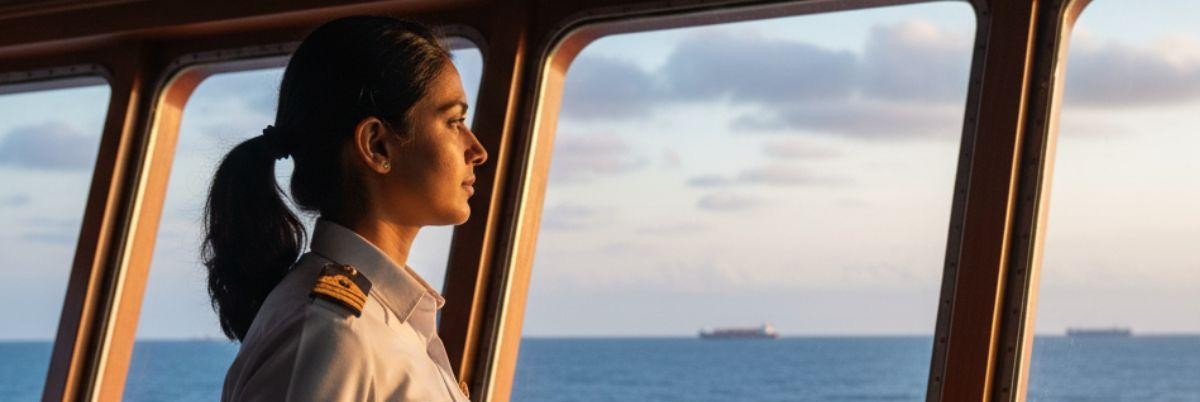
A Snapshot into the Life of a Seafarer
Mental Health Awareness Month is often associated with conversations about stress, wellbeing, and support. But what does mental wellbeing actually look like in the day-to-day reality of life at sea?
This edition explores the quieter challenges that rarely appear in reports or discussions the gradual accumulation of responsibility, distance from family, emotional strain, and the pressure of continuing to perform even when things feel different internally.
Through the lens of a seafarer’s experience, we examine how mental wellbeing influences not only individuals, but also communication, decision-making, leadership, and operational performance onboard.
Whether you sail at sea, manage crews ashore, or support maritime operations, this article offers a deeper perspective on the human realities that often remain unseen.

Every Day, Someone Says “I’m Fine”
A Second Officer midway through a contract continues performing exactly as expected. Navigation duties continue, routines continue, and responsibilities continue. From an operational perspective, nothing appears unusual.
However, family calls have become shorter. Concentration during long watches now requires greater effort than before. Conversations during meals increasingly feel more draining than energising. Sleep feels less restorative, even after adequate rest. Small changes begin appearing, but none seem significant enough to attract attention.
Nothing appears serious. No incident occurs. No concern is raised. No report is filed.
Yet something has changed.
This may be one of the more difficult realities surrounding mental wellbeing at sea: people often continue functioning effectively while quietly struggling internally. Mental Health Awareness Month matters because many challenges at sea do not begin with crisis situations. More often, they begin with smaller shifts that gradually become part of everyday life until they are no longer recognised as changes at all.
“Functioning does not always mean coping.”
Understanding these experiences begins with recognising that life at sea creates conditions unlike many other professions.
Why Maritime Work Creates Unique Psychological Demands
For many professions, work and personal life exist within separate environments. People complete work, return home, reconnect with family, and mentally disconnect before beginning the next day.
Life at sea functions differently.
Onboard environments combine multiple roles into a single space. The vessel becomes a workplace, a home, a social environment, and a place for recovery at the same time. Over long periods, seafarers continue operating within an environment where opportunities for emotional and psychological separation from work become limited.

Several conditions often exist simultaneously:
- prolonged separation from family and support systems
- rotating schedules and disrupted sleep cycles
- sustained operational responsibility
- limited privacy and personal space
- fewer opportunities for emotional recovery
Individually, none of these automatically create mental-health difficulties. Many seafarers adapt exceptionally well. However, together they create a unique form of pressure where maintaining wellbeing depends not on avoiding stress entirely, but on sustaining balance over time.
“The challenge at sea is rarely one difficult moment. More often, it is many manageable moments experienced continuously.”
The complexity is that people often adapt so successfully that gradual changes become difficult to recognise. The challenge is rarely a single event; it is the accumulation of experiences that slowly begin influencing how people feel, think, and recover.
The maritime profession rarely challenges people through a single defining moment. More often, it is the accumulation of smaller experiences that quietly shape how people think, feel, and perform over time.
When Adaptation Quietly Becomes Normalisation
Adaptation is one of the maritime industry’s greatest strengths. Seafarers regularly adjust to changing schedules, operational demands, new environments, and extended periods away from home.
Initially, experiences such as fatigue, emotional strain, or missing important family moments feel noticeable because they interrupt normal routines. Over time, repetition changes perception.
Fatigue begins feeling like part of the job rather than a signal that recovery may be needed. Emotional exhaustion becomes interpreted as temporary stress. Social withdrawal becomes explained away as mood or personality rather than a possible indicator of strain.
The challenge is not adaptation itself. The challenge begins when repeated experiences become so familiar that people stop recognising them altogether.
What once felt difficult gradually becomes accepted as normal. And when something becomes normal, people often stop questioning it.
This is where many challenges remain hidden—not because they are invisible, but because they become familiar.
When Mental Health Quietly Enters Operations
Mental wellbeing is often discussed as something personal, yet onboard environments rarely allow a complete separation between individual wellbeing and operational performance.
Ships rely heavily on communication, teamwork, situational awareness, and decision-making. Small psychological changes therefore rarely remain isolated. A person experiencing prolonged emotional strain does not suddenly stop performing responsibilities. More often, the effects emerge subtly.
Communication may become shorter during stressful situations. Team participation may gradually reduce. People may hesitate before questioning instructions or become less engaged in conversations where they would normally contribute.

None of these changes immediately create incidents. However, repeated over time, smaller shifts can gradually influence larger outcomes.
Mental wellbeing therefore becomes more than an individual concern. It becomes part of the wider operating environment.
“Mental health does not stay inside one person. It gradually becomes part of the environment around them.”
And while these effects may appear onboard, their impact often extends beyond the vessel itself, reaching into relationships and responsibilities that continue far beyond the end of a watch.
The Family Perspective — The Distance Nobody Measures
Shipping measures physical distance with remarkable precision. Routes are calculated, arrival schedules are monitored, and voyages are planned carefully.
Yet another form of distance exists that cannot easily be measured.
The distance between hearing difficult news from home and beginning another watch. The distance between missing birthdays, anniversaries, and family milestones while continuing responsibilities onboard. The distance between wanting to remain emotionally present while being physically absent.
These experiences rarely appear during operational discussions, yet they form part of the reality many seafarers quietly carry throughout their contracts.
Some distances are travelled physically.
Others are carried emotionally.
Recognising these realities is important because awareness is often the first step towards support. Before any course adjustment can take place, people first need a clearer understanding of where they currently stand.
Psychological Position Fix Strategy
Before vessels correct their course, they first determine their position. People often require a similar process. Recognising psychological position does not require a crisis. More often, it begins by noticing small changes before they gradually influence wellbeing, relationships, or performance.
Consider three questions:
Position 1 — Mental Load
What thoughts or concerns have occupied my mind repeatedly over recent days or weeks?
Position 2 — Energy Shift
Has my motivation, patience, or energy changed compared with earlier in my contract?
Position 3 — Connection Check
Have I become less engaged with conversations, colleagues, or activities that would normally help me feel connected?
This process is not intended to diagnose problems. It is intended to increase awareness before smaller changes quietly become larger ones.
However, awareness alone is rarely enough. Meaningful change happens when awareness is supported by conversations, culture, and environments that encourage people to speak up before challenges become overwhelming.
Mental Health Awareness Beyond Conversations
Mental Health Awareness Month creates important discussions, but conversations alone rarely create lasting change.

The maritime industry increasingly recognises that support rarely begins during moments of crisis. More often, support begins through everyday interactions and environments where people feel comfortable expressing concerns before they become overwhelming.
Onboard, this may involve leaders recognising behavioural changes before they become more significant. It may involve colleagues noticing when someone who is usually engaged gradually becomes quieter or withdrawn. At an organisational level, it means creating cultures where psychological wellbeing becomes part of normal operational life rather than a separate initiative discussed only when problems appear.
Sustainable support rarely emerges from one major intervention. More often, it develops through smaller actions repeated consistently over time.
Ultimately, supporting wellbeing is not separate from supporting performance. In many ways, they are deeply connected.
Strive High Perspective
At Strive High, we frequently discuss performance, resilience, and leadership development. One observation continues appearing across conversations with maritime professionals: technical competence alone rarely determines long-term performance.
People may operate systems, procedures, and technology successfully for years, yet sustainable performance often depends on something less visible — the ability to recover effectively, remain connected, communicate openly, and maintain psychological balance within demanding environments.
Mental wellbeing therefore sits alongside performance rather than separate from it.
Closing Reflection — The Weight That Remains Unreported
Every day, ships move cargo across oceans through systems carefully designed to monitor what is being carried.
Yet seafarers often carry another type of weight that cannot easily be documented: responsibility, distance from family, expectations, emotional strain, and the gradual mental load accumulated through everyday life at sea.
Much of it never enters reports. Much of it never becomes visible.
Yet it is carried every day.
Mental Health Awareness Month is not only about recognising crisis situations. Sometimes it begins with recognising what people may have been carrying long before anyone notices.
The maritime industry has spent decades improving how it manages operational risk. Perhaps the next step is becoming equally effective at recognising the human pressures that influence performance long before they become visible. Because every vessel depends not only on systems and procedures, but on people carrying responsibilities that are often unseen.
“Not every burden at sea requires lifting. Sometimes it simply needs recognising.”
Ready to strengthen emotional resilience, leadership awareness, and sustainable performance onboard? Let’s connect.