


MLC Requirements for Seafarers: Latest MLC Maritime Regulations Update 2026
The maritime industry operates under strict international standards to ensure the safety, welfare, and rights of seafarers worldwide. One of the most important regulations governing maritime employment is the Maritime Labour Convention (MLC). The latest MLC maritime regulations update introduces stronger protections for seafarers while increasing compliance responsibilities for shipowners and operators.
Understanding the updated MLC requirements for seafarers is essential for maritime professionals, shipping companies, and training institutions.
In this blog, we’ll explore the latest MLC updates, key seafarer requirements, compliance standards, and how these regulations impact the future of the shipping industry.
What Is the Maritime Labour Convention (MLC)?
The International Labour Organization introduced the Maritime Labour Convention in 2006 to establish global minimum working and living standards for seafarers.
Often referred to as the “Seafarers’ Bill of Rights,” the MLC covers:
- Employment conditions
- Working hours
- Crew accommodation
- Medical care
- Health and safety
- Food and catering
- Repatriation rights
- Social protection
The convention applies to most commercial vessels engaged in international trade.
Why the MLC Maritime Regulations Update Matters
The maritime industry has experienced significant operational challenges in recent years, especially after the COVID-19 pandemic. Issues such as crew fatigue, mental health concerns, delayed crew changes, and abandoned seafarers highlighted the need for stronger regulations.
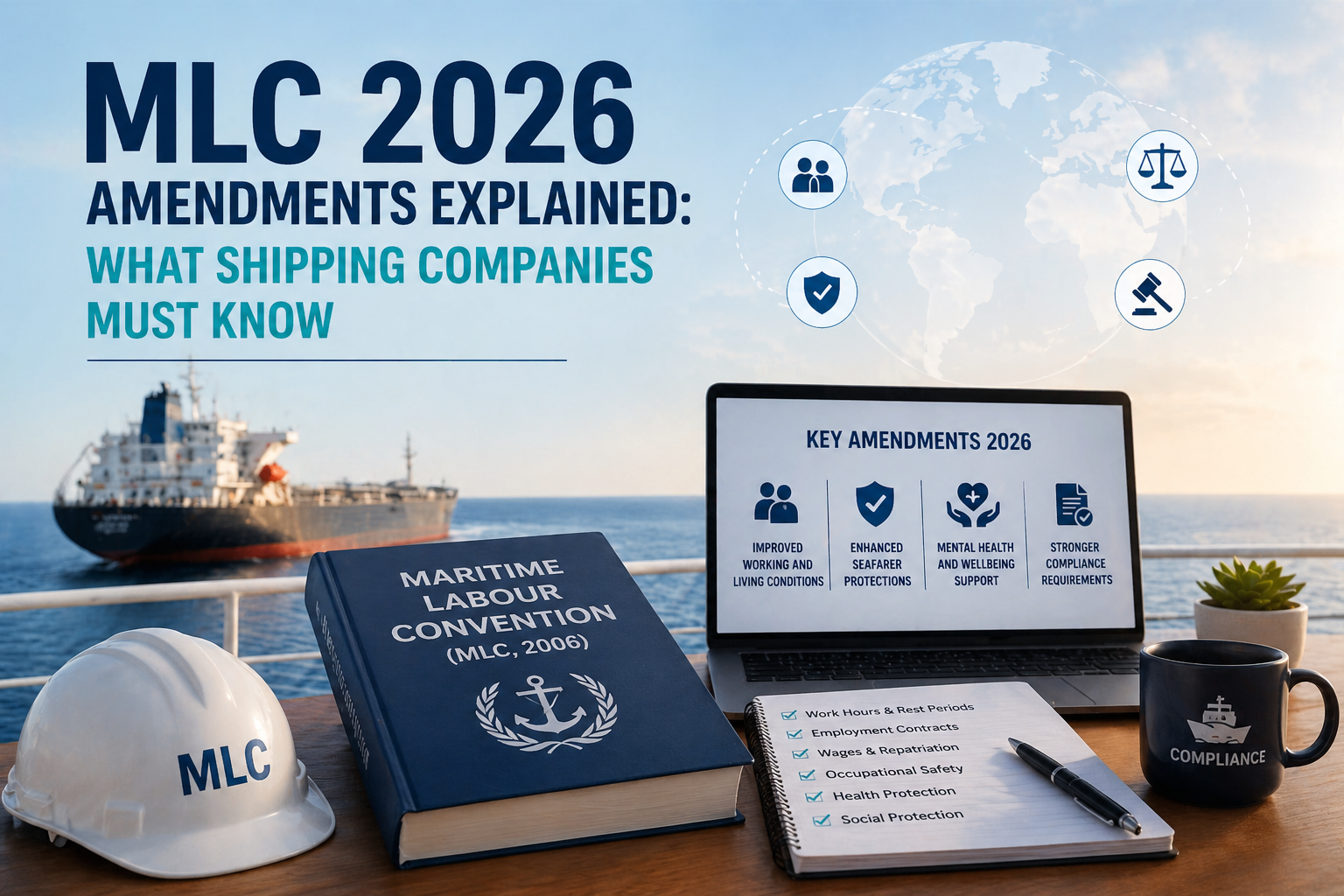
The latest MLC maritime regulations update focuses on:
- Improved seafarer welfare
- Better onboard safety
- Mental health protection
- Stronger repatriation rights
- Enhanced compliance monitoring
These changes aim to create safer and fairer working conditions across the global shipping industry.
Key MLC Requirements for Seafarers
1. Valid Employment Agreements
Every seafarer must receive a legally compliant employment agreement that clearly states:
- Salary details
- Contract duration
- Working hours
- Leave entitlements
- Repatriation conditions
Seafarers must fully understand their employment terms before joining a vessel.
2. Hours of Work and Rest
The updated MLC requirements emphasize fatigue prevention.
Shipping companies must ensure seafarers receive:
- Adequate rest periods
- Regulated working hours
- Proper watch schedules
Fatigue management is critical for reducing maritime accidents and improving operational safety.
3. Medical Care and Health Protection
Seafarers are entitled to medical care onboard and ashore when needed.
MLC requirements include:
- Access to medical equipment
- Qualified medical personnel
- Emergency medical support
- Health insurance coverage
The latest regulations also place greater focus on mental health support and wellbeing programs.
4. Safe Working Environment
The MLC maritime regulations update strengthens occupational safety standards onboard ships.
Shipowners must provide:
- Safety training
- Personal protective equipment (PPE)
- Emergency response procedures
- Accident reporting systems
Safe working conditions help reduce injuries and improve crew confidence.
5. Accommodation and Food Standards
The MLC establishes minimum standards for crew accommodation, including:
- Ventilation
- Lighting
- Noise control
- Cleanliness
- Recreational facilities
Seafarers must also receive nutritious meals prepared under hygienic conditions.
Crew welfare directly impacts morale and productivity onboard.
6. Repatriation Rights
One of the most important MLC requirements for seafarers involves repatriation rights.
Seafarers must be returned to their home country when:
- Contracts expire
- Medical emergencies occur
- Ships are abandoned
- Employment ends unexpectedly
The latest MLC updates place stricter obligations on shipowners regarding timely repatriation.
7. Protection Against Harassment and Bullying
Modern maritime regulations now emphasize respectful working environments.
Shipping companies are encouraged to implement:
- Anti-harassment policies
- Complaint procedures
- Crew awareness programs
- Zero-tolerance workplace standards
This supports diversity, inclusion, and professionalism onboard vessels.
How the MLC Maritime Regulations Update Affects Shipping Companies
Shipping companies must continuously monitor and improve compliance systems to meet updated MLC standards.
Failure to comply may result in:
- Port State Control detentions
- Financial penalties
- Legal liabilities
- Operational delays
- Reputation damage
Maritime operators are now investing more in crew welfare programs, training, and compliance audits.
Importance of MLC Training for Seafarers
Seafarers must stay updated with the latest MLC requirements through regular maritime training programs.
Training helps crew members understand:
- Workplace rights
- Safety procedures
- Reporting mechanisms
- Emergency preparedness
- International maritime standards
Continuous learning improves both safety and career opportunities.
Future of Maritime Labour Regulations
The future of maritime regulations will likely focus on:
- Digital connectivity onboard
- Mental health support systems
- Environmental sustainability
- Cybersecurity awareness
- Automation and smart shipping
As the maritime industry evolves, MLC standards will continue adapting to protect seafarers and modernize shipping operations.
Why MLC Compliance Is Important
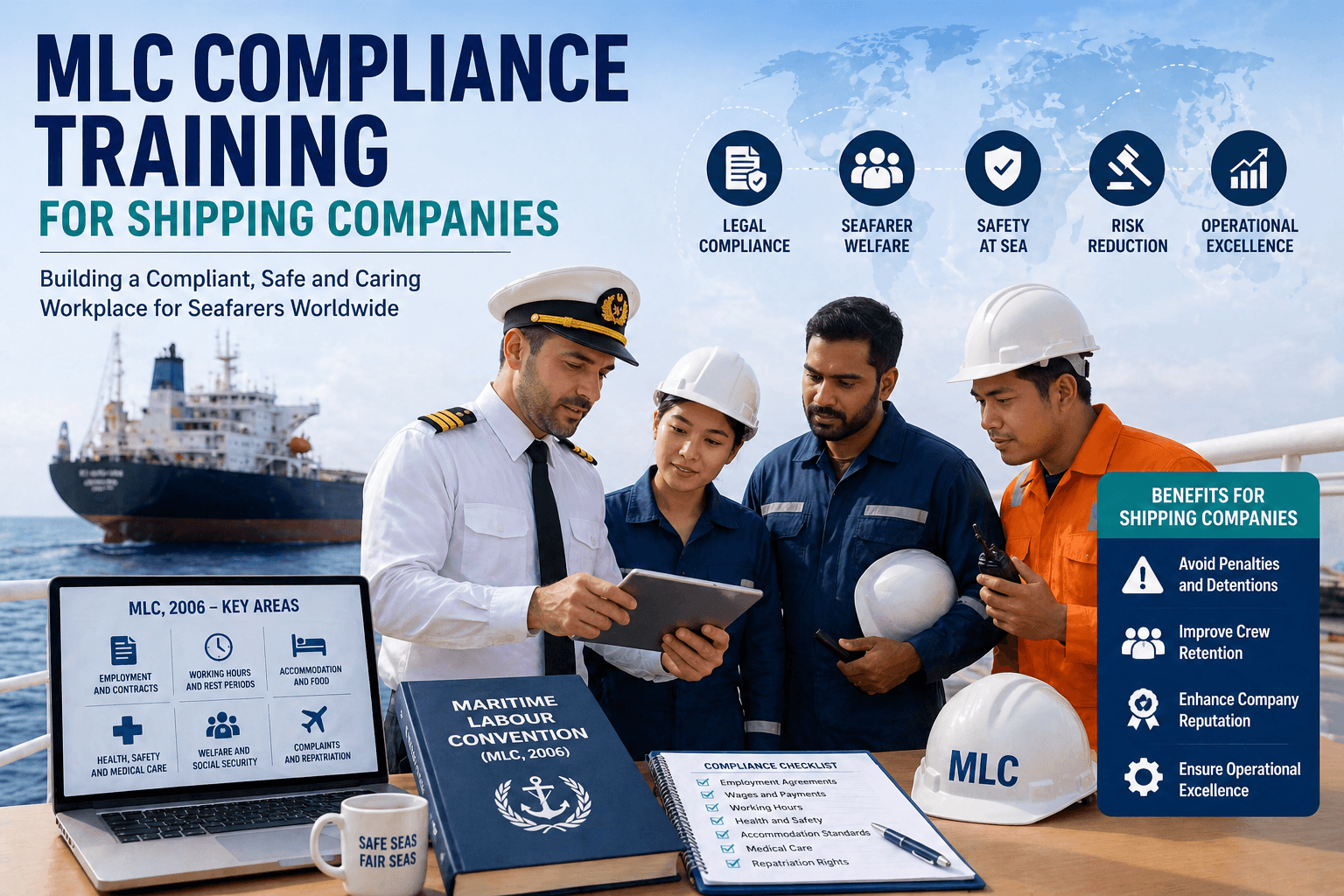
MLC compliance benefits both seafarers and shipowners by improving:
- Operational safety
- Crew retention
- International reputation
- Workforce wellbeing
- Regulatory performance
Companies that prioritize compliance often experience stronger operational efficiency and lower workforce turnover.
Conclusion
The latest MLC maritime regulations update represents a major step toward improving global seafarer welfare and maritime safety. Understanding the updated MLC requirements for seafarers is essential for maintaining compliance and creating safer working environments onboard ships.
From fair employment agreements to mental health protection and stronger safety standards, the Maritime Labour Convention continues to shape the future of the global shipping industry.
For maritime professionals and shipping companies alike, staying informed about evolving MLC regulations is critical for long-term success in today’s competitive maritime sector.