

January at sea arrives without ceremony.
There are no countdowns, no fireworks, and no reset buttons on the bridge or in the engine room. While the world ashore speaks of fresh starts and resolutions, ships continue on their assigned routes, steady, disciplined, and uninterrupted.
For seafarers, January often feels subtle yet weighty. Contracts continue, watches rotate, and routines resume with the same precision as the months before. But beneath this familiar rhythm, January carries something important: the responsibility of setting the tone for the entire year.
“The sea does not announce new beginnings, but every voyage begins somewhere.”
This quiet beginning matters. How a crew communicates, supports one another, and approaches responsibility in January often shapes the emotional and professional climate for the months that follow.
The Mental Shift That Comes with a New Year at Sea
Unlike shore-based professions, seafarers do not step into a new year with clean breaks. There is no pause between December and January, only continuity. Voyages continue, watches rotate, and responsibilities remain unchanged. The calendar may turn, but life at sea moves forward without interruption.
Yet mentally, many seafarers experience a subtle shift. January often brings a quiet recalibration, an internal moment where time, responsibility, and purpose are felt more sharply. Thoughts about contracts, career paths, family back home, and personal endurance surface quietly, often unspoken.
This shift is not dramatic, nor is it always visible. It may appear as increased self-reflection, renewed focus on performance, or a heightened sense of accountability. For some, it brings motivation; for others, a thoughtful weight.
What makes this transition unique at sea is that it happens internally, while everything externally remains the same. And it is within this quiet mental adjustment that the tone for the year ahead is often set.
January often brings renewed responsibility, quiet self-expectations, and reflections about time spent at sea, career direction, and personal sacrifice. These thoughts are rarely spoken aloud, but they influence motivation, patience, and focus.
“A new year does not demand perfection. It asks for direction.”
This shift is not weakness—it is awareness. Recognizing it allows seafarers and leaders to navigate the year with greater intention rather than silent pressure.
What’s Changing: Understanding the MLC Amendment
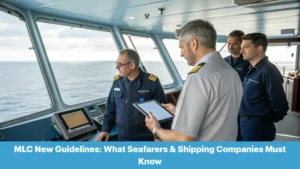
The start of the year is also when regulatory updates begin to take effect. One of the most significant for the maritime community is the recent amendment to the Maritime Labour Convention (MLC).
At its core, the amendment reflects a simple but powerful truth:
Seafarer welfare is not optional—it is a right tied directly to safety, performance, and dignity at sea.
Key focus areas of the MLC amendment include:
- Clearer responsibilities for shipowners to actively safeguard seafarer well-being
- Improved expectations around access to medical care and support, including shore-based assistance
- Stronger recognition of harassment, bullying, and unfair treatment as welfare violations
- Greater emphasis on mental and social well-being as part of decent working and living conditions
“Regulations do not replace care—but they can protect dignity.”
The amendment signals a shift from seeing welfare as an added benefit to recognizing it as a core operational requirement.
What the MLC Amendment Means for Seafarers Onboard
For seafarers, the MLC amendment is not about forms, certificates, or compliance checklists. Its real significance lies in how life is experienced onboard each day. It speaks to the environment in which seafarers live and work, how they are treated, how concerns are handled, and how dignity is maintained under demanding conditions.
At its core, the amendment reinforces the right to work in a space where respect is non-negotiable. This means professional conduct across all ranks, zero tolerance for humiliation or intimidation, and everyday interactions rooted in fairness rather than fear. Respect is no longer a courtesy; it is an expected standard.
The amendment also strengthens a seafarer’s right to raise concerns without worrying about punishment, isolation, or retaliation. Speaking up about safety, welfare, or behavior should not feel risky. When concerns are heard and addressed responsibly, problems are resolved early and trust within the crew is preserved.
Equally important is the right to receive appropriate support when health or well-being is affected. Whether the challenge is physical, emotional, or mental, seafarers should not feel pressured to endure in silence. Access to care, understanding, and support is part of a humane and professional working environment.
Finally, the amendment reinforces the principle of fair treatment for all regardless of rank, nationality, gender, or background. Every seafarer contributes to the safe operation of the vessel, and every seafarer deserves to be treated with dignity and equality. These rights are not privileges; they form the foundation of decent work at sea.
“Fair conditions are not privileges. They are foundations.”
Awareness plays a crucial role here. When seafarers understand their rights, they are better able to recognize healthy shipboard practices—and to identify when standards are quietly slipping.
Professional Awareness in a Changing Regulatory Landscape
With amendments come renewed expectations. January often marks a period of heightened audits, inspections, and compliance reviews.
Professional awareness now goes beyond technical competence. It includes:
- Understanding updated welfare and conduct policies
- Participating honestly in discussions around working conditions
- Using reporting channels responsibly and confidently
- Supporting a culture where compliance is normalized, not feared
“Compliance is strongest when people understand the purpose behind it.”
When MLC principles are understood, compliance stops feeling imposed and begins to feel shared. It becomes a collective responsibility, one upheld through everyday actions, mutual respect, and common purpose, rather than enforced only from the top.
The Human Side of Compliance
No regulation can create a healthy ship on its own. Rules may define expectations, but it is culture that determines how those expectations are lived each day. The way people speak, listen, and respond under pressure ultimately bridges the gap between policy and practice.
Everyday actions make the difference:
- Speaking respectfully, even under pressure
- Addressing inappropriate behavior early
- Leaders modelling professionalism and fairness
- Crew members supporting one another without judgement
“A respectful ship is the safest kind of ship.”
The MLC amendment provides structure. Human behavior gives it meaning.
Leadership in January – Responsibility Beyond Rank
For masters, chief engineers, officers, and senior crew, MLC compliance begins not with checklists or inspections, but with leadership attitude. How leaders respond to concerns, communicate expectations, and model behavior sets the standard for the entire vessel. Crew members take their cues from what leadership consistently practices, not just from what policies state.
Effective leadership under the amendment requires taking welfare concerns seriously, even when they are inconvenient or uncomfortable to address. It means responding to grievances with calmness and professionalism, rather than defensiveness or dismissal. When concerns are handled thoughtfully, trust is built and issues are resolved before they escalate.
At the same time, good leadership encourages openness without compromising discipline. Creating space for crew members to speak up does not weaken authority; it strengthens accountability. Clear expectations, fair responses, and respectful communication allow discipline and psychological safety to coexist.
Ultimately, leadership is demonstrated through everyday behavior. Consistency, fairness, and respect in daily interactions reinforce MLC principles far more effectively than formal directives alone. When leaders embody these values, compliance becomes part of the ship’s culture rather than an external requirement.
“People comply best when they feel protected, not watched.”
Leadership is the bridge between regulation and reality. How leaders respond determines whether policies are trusted or avoided.
Reflection Without Dwelling
January reflection is not about revisiting past mistakes. It is about moving forward with clarity and awareness.
Questions worth asking onboard:
- Do I understand my rights and responsibilities under MLC?
- Do I feel safe speaking up when something feels wrong?
- How can I contribute to a healthier ship culture this year?
“Direction matters more than resolution.”
Even brief reflection strengthens accountability and professionalism.
A Message to Every Seafarer This January
To every seafarer beginning another year at sea
standing watch, maintaining systems, navigating responsibilities, and keeping global trade moving
Your work matters.
Your professionalism matters.
Your well-being matters.
“The strongest starts are often the quietest.”
From everyone at Strive-High, our focus remains steady as the industry continues to evolve, standing alongside seafarers through learning that is practical, respectful, and rooted in real shipboard life.
As the year unfolds, we hope the months ahead bring safer operations, where attention to detail and shared responsibility guide daily work. May working environments remain fair and humane, with open and confident communication supporting strong teamwork and understanding. Above all, we wish for consistent and dependable voyages that allow crews to work with confidence and peace of mind.
“Progress at sea is shaped by what we practice every day.”
With respect and confidence in the journey ahead,
— Strive-High
About Strive High
For over a decade, Strive High has specialized in behavioral skills training, leadership development, and mental wellbeing solutions for the maritime industry. With over 10,000 maritime professionals trained across 20+ countries, we deliver evidence-based soft skills programs that enhance both safety and crew welfare.
Learn more about our maritime mental health programs: www.strive-high.com