

10 Leadership Skills Every Maritime Officer Needs in 2026
The maritime industry is changing rapidly. Modern ships operate with advanced technology, multicultural crews, stricter safety requirements, and increasing operational pressures. In this environment, technical knowledge alone is not enough. Maritime officers need strong leadership abilities to manage people, make effective decisions, and maintain safe and efficient operations.
Developing the right Maritime Leadership Skills can help officers build stronger teams, improve communication, handle challenging situations, and create a positive safety culture onboard.
Here are 10 essential leadership skills every maritime officer should develop in 2026.
1. Effective Communication
Communication is one of the most important Maritime Leadership Skills. Officers regularly communicate with crew members, shore-based teams, vessel management, and other stakeholders.
Clear communication helps prevent misunderstandings, especially during critical operations. Officers should give clear instructions, actively listen to crew members, and confirm that important information has been understood.
Effective communication is particularly important when working with multinational crews where language and cultural differences may create additional challenges.
2. Decision-Making
Maritime officers often need to make decisions under pressure. Weather changes, equipment failures, operational risks, and emergencies can require quick and responsible action.
Strong leaders assess available information, identify risks, consider alternatives, and make decisions based on safety and operational priorities.
Good decision-making also means knowing when to involve other crew members and use their experience before taking action.
3. Emotional Intelligence
Emotional intelligence is becoming increasingly important in maritime leadership. Officers work with people who have different personalities, cultures, experiences, and communication styles.
An emotionally intelligent leader understands their own emotions while recognizing how others may be feeling.
This helps officers manage conflicts, support crew members, and maintain positive working relationships onboard.
4. Team Building
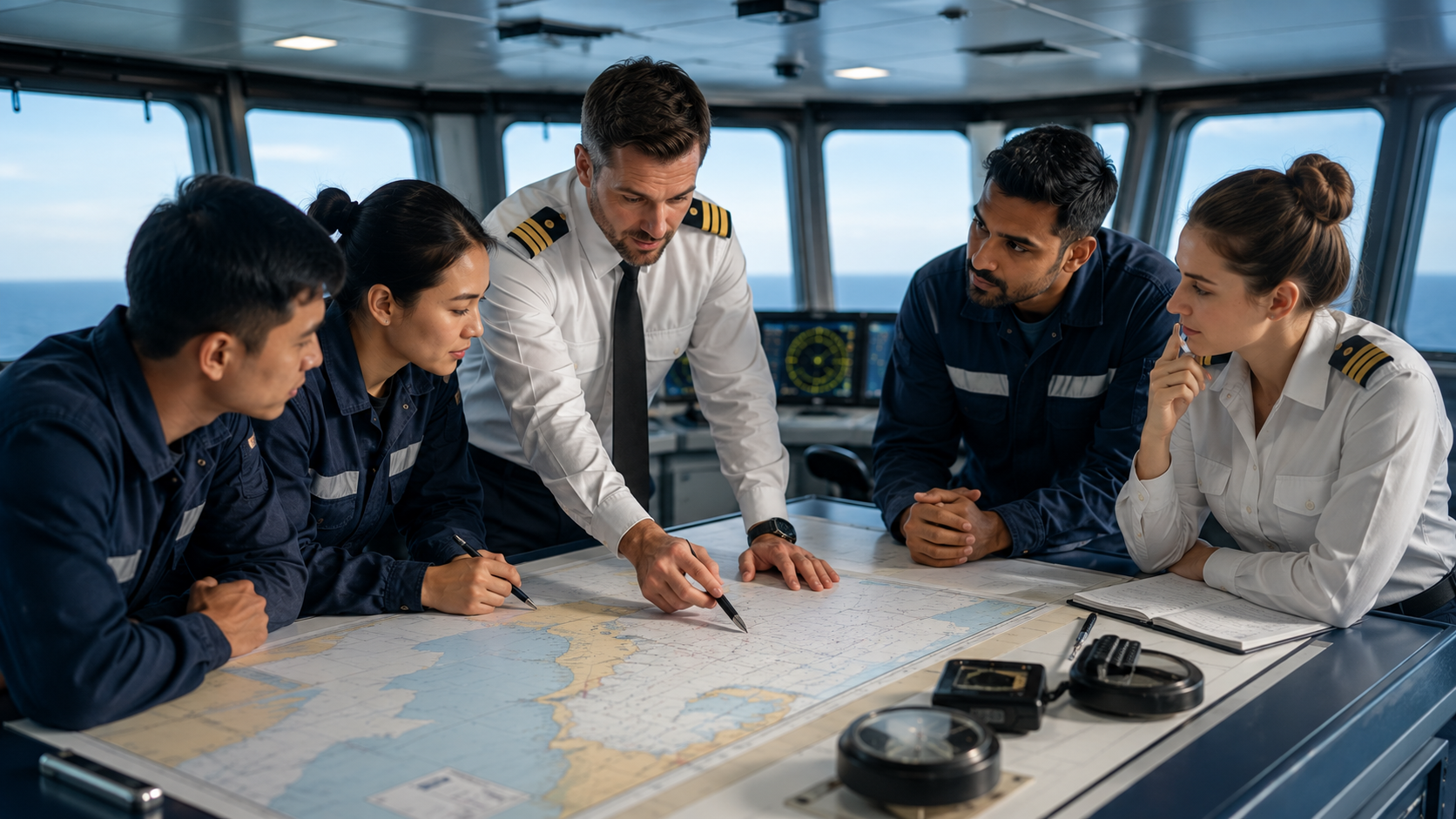
A ship depends on teamwork. Every crew member has a specific responsibility, but successful operations require everyone to work together.
Officers should encourage cooperation, recognize individual contributions, and create an environment where crew members feel comfortable sharing concerns and ideas.
Strong team-building skills can improve trust, coordination, and overall vessel performance.
5. Safety Leadership
Safety should always be a leadership priority onboard. Officers must demonstrate safe behaviour rather than simply instructing others to follow procedures.
Effective safety leaders encourage hazard reporting, conduct meaningful safety discussions, and ensure that lessons from incidents and near misses are shared with the crew.
When officers consistently demonstrate their commitment to safety, crew members are more likely to follow the same standards.
6. Conflict Management
Conflicts can occur onboard because crew members spend long periods working and living together in a confined environment.
Strong officers should be able to identify conflicts early and address them professionally. Instead of ignoring disagreements, leaders should listen to both sides, understand the underlying issue, and work toward a practical solution.
Good conflict management helps maintain teamwork and reduces unnecessary stress onboard.
7. Adaptability
The maritime industry continues to evolve through automation, digitalisation, environmental regulations, and new operational practices.
Officers need to adapt to changing technologies, procedures, and working environments.
An adaptable leader remains open to learning and encourages the crew to develop new skills. This is especially important in 2026 as digital systems and smart-ship technologies become increasingly integrated into maritime operations.
8. Problem-Solving
Unexpected problems are part of maritime operations. Equipment issues, scheduling challenges, communication failures, and operational disruptions can happen at any time.
Effective leaders approach problems systematically. They identify the root cause, evaluate possible solutions, and take corrective action.
Developing strong problem-solving skills enables officers to respond confidently while reducing operational risks.
9. Coaching and Mentoring
Experienced maritime officers play an important role in developing the next generation of seafarers.
Instead of simply giving instructions, effective leaders coach crew members and provide constructive feedback. They help junior officers understand their responsibilities and encourage continuous professional development.
Mentoring also creates a stronger knowledge-sharing culture onboard and helps build future maritime leaders.
10. Cultural Awareness
Modern vessels often have multinational crews. Different cultures may have different communication styles, expectations, and approaches to authority.
Cultural awareness helps officers understand these differences and create a respectful working environment.
Leaders who value cultural diversity can improve cooperation, reduce misunderstandings, and build stronger relationships among crew members.
Why Maritime Leadership Skills Matter in 2026
The role of a maritime officer is no longer limited to technical supervision. Officers are expected to lead people, manage risks, communicate effectively, support safety, and respond to increasingly complex operational situations.
Strong Maritime Leadership Skills can contribute to:
- Better crew communication
- Improved teamwork
- Stronger safety culture
- Faster and better decision-making
- Reduced workplace conflicts
- Higher crew engagement
- Better operational performance
- Stronger future leadership pipelines
Conclusion
Leadership is a continuous learning process. Maritime officers who invest in developing their leadership abilities can become more effective, confident, and trusted leaders onboard.
From communication and decision-making to emotional intelligence, safety leadership, adaptability, and cultural awareness, these Maritime Leadership Skills are essential for navigating the challenges of modern shipping.
In 2026 and beyond, successful maritime leadership will depend not only on managing ships effectively but also on understanding, supporting, and developing the people who operate them.