

Celebrate Day of the Seafarer by exploring inspiring stories, leadership insights, and the vital role seafarers play in keeping the world connected.
A Note from the Editor
Every year, we pause to recognise the remarkable contribution of seafarers—the people whose dedication keeps global trade moving and whose work quietly touches lives across the world.
This year, we wanted to honour that contribution in a different way. Instead of simply expressing our appreciation, we chose to listen.
Over the past month, Strive High had the privilege of speaking with four distinguished maritime professionals whose careers span shipboard command, marine engineering, maritime education, and global ship management. While each conversation explored a different aspect of the profession, together they revealed something far more meaningful than we had anticipated.
This edition is not a collection of interviews. It is a reflection on the lessons that emerged from them. As we listened, we found ourselves thinking less about ships and more about people; less about positions and more about purpose; less about recognition and more about responsibility.
We hope these encourage you to look beyond the voyage itself and appreciate the values that make every successful voyage possible. Because while the world may thank seafarers for one day, their professionalism, resilience, and leadership continue to carry the world every day.
Ms. Suganya Selvaraj
Marketing & Communications Manager
Strive High Pte. Ltd.
What We Learned by Listening
Every profession has something to teach us—not just through what people do, but through the way they think, lead, and respond to challenges. The maritime profession is no different. While ships transport the world’s cargo, it is the people behind every voyage who quietly shape the values that keep the industry moving.
Over the past month, we had the opportunity to speak with four distinguished maritime professionals whose careers span shipboard command, marine engineering, maritime education, and global ship management. Each conversation explored a different topic, yet together they offered something far more valuable than answers to individual questions. They revealed a shared mindset.
One thought, in particular, stayed with us. As Capt. Hari Subramaniam reflected, “Shipping has always been, and will always remain, a people business.” The simplicity of those words challenged us to look beyond ships, systems, and operations. Behind every successful voyage are people making thoughtful decisions, supporting one another, sharing knowledge, and carrying responsibilities that extend far beyond transporting cargo from one port to another.
As we looked across every conversation, we realised that the most valuable lessons were not about technology or technical expertise alone. They were about leadership, continuous learning, communication, character, and the responsibility that comes with influencing others. Different careers had led to different experiences, but the values remained remarkably consistent.
The first of those values appeared in every conversation, regardless of where it began.

Leadership Is Earned Before It Is Needed
A calm voyage rarely reveals the strength of a leader. It is in moments of uncertainty—a sudden change in weather, an unexpected equipment failure, or a decision that must be made under pressure—that people instinctively look towards someone they trust. Yet by the time those moments arrive, leadership has already been established.
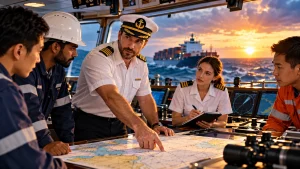
That was one of the clearest lessons to emerge from our conversations. None of the professionals we spoke with described leadership as a title, a rank, or a position of authority. Instead, they spoke about the habits that quietly build trust every day: listening before speaking, supporting others, sharing knowledge, remaining calm under pressure, and setting an example through consistent actions.
Dr. Capt. Arife Tuğsan Çolak summed it up in a simple but powerful reflection:
“Rank gives authority, but character gives influence.”
Those words remind us that while authority may come with a position, influence is earned through integrity, humility, and the way we treat people every single day. The leaders who leave the greatest impact are not remembered because they gave the most instructions—they are remembered because they inspired confidence, encouraged others to grow, and created teams where people felt valued.
Looking back at every conversation, we realised that leadership was never presented as the destination. It was the foundation upon which every other quality was built. And perhaps that is why the leaders we met all shared one characteristic, regardless of their experience or achievements. They never stopped learning.
The Best Seafarers Never Stop Being Students
The maritime industry never stands still. New technologies emerge, regulations evolve, equipment advances, and every voyage brings a different set of circumstances. In a profession that is constantly changing, one quality remains timeless—the willingness to keep learning.
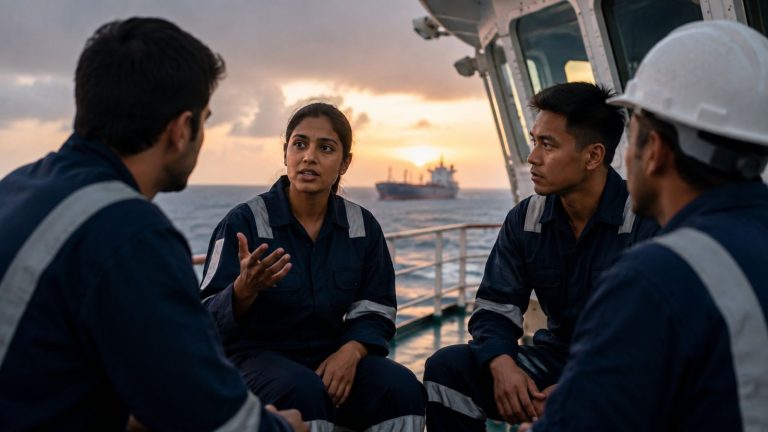
One theme echoed throughout our conversations: experience should never become a reason to stop asking questions. In fact, the more experienced the professional, the greater their responsibility to remain curious, adapt to change, and share knowledge with those who follow. Learning was never spoken of as a phase of a career; it was described as a mindset.
Dr. Capt. Arife Tuğsan Çolak captured this beautifully when she said:
“The sea will always test what you truly know, not what you appear to know.”
It is a reminder that true confidence comes not from believing we know everything, but from being willing to learn something new every day. Whether adapting to emerging technologies, mentoring junior officers, or learning from a colleague’s experience, growth begins with humility.
Perhaps that is why the most respected professionals are also the most approachable. They understand that knowledge grows when it is shared, questions are encouraged, and every generation learns from the one before it. In doing so, they create cultures where learning becomes a collective responsibility rather than an individual achievement.
Learning, however, does not happen in isolation. It depends on something just as important—the ability to listen, speak openly, and learn from one another.
Communication: The Invisible Force Behind Every Safe Voyage
Every successful voyage depends on thousands of decisions. Some are major, many are routine, but almost all of them rely on one thing—clear and effective communication.
Whether it is a handover between watches, a conversation on the bridge, a discussion in the engine room, or a simple question asked at the right moment, communication shapes the way crews work together. It builds trust, prevents misunderstandings, and creates an environment where people feel confident enough to speak up when something doesn’t seem right.

During one of our conversations, Shree Dhar Pandey shared a perspective that stayed with us:
“Traditional training teaches them systems. I try to teach them how to think.”
That observation reaches far beyond technical training. The strongest teams are not built by procedures alone; they are built by encouraging dialogue, critical thinking, and the confidence to ask questions. When people feel heard, they are more willing to share ideas, challenge assumptions respectfully, and learn from one another.
Perhaps this is why communication appeared repeatedly throughout our discussions, even when it wasn’t the main topic. Leadership depends on it. Learning grows through it. Strong teams are sustained by it. In many ways, communication is the thread that quietly connects every other quality we explored in this edition.
And when people look back on a career, they rarely remember every instruction that was given. They remember how someone made them feel.
Character Is What People Remember
Every voyage eventually comes to an end. Cargo is delivered, objectives are achieved, and the crew moves on to the next assignment. Yet long after the details of a voyage begin to fade, one thing remains remarkably clear—the people we had the privilege of working with.
Throughout our conversations, it became evident that while technical competence earns respect, character leaves a lasting impression. The professionals who make the greatest impact are not remembered simply because of what they accomplished, but because of how they treated others. They lead with humility, remain approachable regardless of their position, and understand that respect is earned through everyday actions rather than authority alone.
Dr. Capt. Arife Tuğsan Çolak captured this perfectly when she said:
“Rank gives authority, but character gives influence.”
It is a reminder that influence cannot be assigned through a title. It is built through consistency, fairness, empathy, and the willingness to invest in the growth of others. These qualities shape strong teams, strengthen professional relationships, and create workplaces where people feel valued and supported.
Looking back, we realised that every interview, regardless of the topic, carried the same quiet message: careers are measured by achievements, but legacies are measured by people. The greatest professionals are remembered not only for the voyages they completed, but for the confidence they inspired, the knowledge they shared, and the lives they influenced along the way.
And perhaps that is what makes life at sea so unique. Behind every successful voyage are personal sacrifices that few people ever see—but every seafarer quietly carries them.
The Weight They Carry
When people think about seafarers, they often think about the cargo they transport. Rarely do we think about the responsibilities they carry long before a ship reaches its destination.
Life at sea is built on commitment. It means spending weeks or even months away from family, adapting to changing weather, working with multicultural crews, and making sound decisions regardless of the circumstances. While these realities are part of the profession, they are also reminders that every successful voyage depends on people who continue to perform with professionalism, even when the challenges remain unseen. One perspective shared by Anubhav Garg stayed with us throughout these conversations:
“Being future-ready is not just about adopting technology—it is about preparing people for the future.”
Those words extend beyond technology. Preparing people also means supporting their wellbeing, investing in their growth, and creating workplaces where they feel valued, respected, and equipped to succeed. As the maritime industry continues to evolve, this people-first approach will remain one of its greatest strengths.

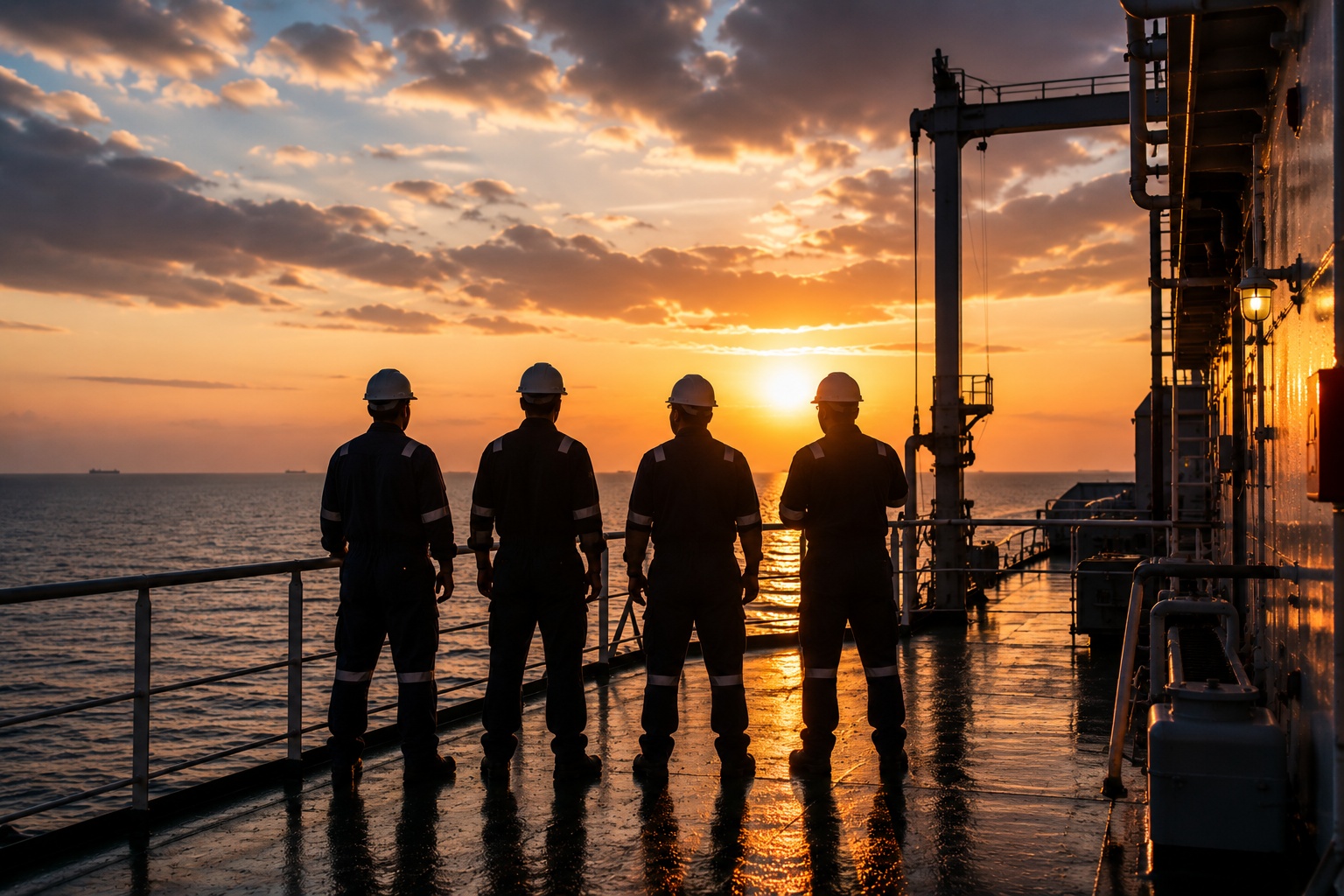
Perhaps that is what carrying the world truly means. It is not simply about moving cargo across oceans. It is about carrying responsibility with integrity, supporting one another through challenges, and remaining committed to a profession that quietly connects the world every single day.
As we reflected on everything we had learned, one final question stayed with us.
If we recognise these contributions for one day each year, what should appreciation look like during the other 364?
Beyond Appreciation
Every June, the maritime industry comes together to celebrate the people who keep the world moving. The messages of gratitude, stories of resilience, and words of recognition are all well deserved. They remind us to pause and acknowledge a profession whose impact extends far beyond the oceans it sails.
But appreciation should never be limited to a single month.
As we reflected on the conversations that shaped this edition, we realised that the greatest way to honour seafarers is not simply by recognising what they do, but by embracing the values they live every day. Leadership that earns trust. A commitment to continuous learning. Open communication. Strong character. A people-first mindset. These are not just maritime values—they are principles that strengthen every organisation, every team, and every profession.
Perhaps that is the greatest lesson we learned by listening. The professionals we spoke with did more than share stories from their careers; they reminded us that the maritime industry has always been built on people. Ships may carry cargo across the world, but it is people who carry responsibility, inspire confidence, and shape the future of the industry.
As this edition comes to a close, we hope the conversations do not.
May they continue in classrooms, on bridges, in engine rooms, in boardrooms, and wherever people come together to learn from one another. Because the true measure of appreciation is not what we say during Seafarer Month, but what we choose to carry forward long after it has passed.
Before we conclude, we would like to leave you with the voices that inspired this edition.
The following pages belong to them.
The Voices Behind These Pages
Every meaningful conversation leaves something behind. Sometimes it is a new perspective. Sometimes it is a simple idea that stays with us long after the discussion has ended.
Throughout this edition, we have reflected on the lessons that emerged from our conversations. Before we close, we would like to return to the people who inspired those reflections and leave you with a few of the thoughts that continue to resonate with us.
Marine Cargo & Logistics Advisor, Howden | Advisor, Strive High
With decades of maritime leadership experience, Capt. Hari consistently reminded us that technical excellence is only one part of professional success. Lasting impact is created through humility, empathy, and the ability to build strong relationships.
“It’s more important to be nice than important.”
“Shipping has always been, and will always remain, a people business.”
Senior Chief Engineer | Advisor, Strive High | MOL Presidential Award Recipient (2025)
Drawing upon years of engineering and leadership experience, Shree Dhar highlighted the importance of developing people alongside technical competence, encouraging future professionals to think beyond procedures.
“The machinery was the easy part. The harder job was the people standing next to it.”
“Traditional training teaches them systems. I try to teach them how to think.”
Master Mariner | Maritime Educator | Researcher
Throughout our conversation, Dr. Capt. Tuğsan challenged conventional thinking about leadership and professional growth, reminding us that influence is earned through character and learning never truly ends.
“Rank gives authority, but character gives influence.”
“The sea will always test what you truly know, not what you appear to know.”
Managing Director & Chief Operating Officer, NYK Shipmanagement
Looking ahead, Anubhav shared a vision of a maritime industry where innovation succeeds because people are prepared to grow alongside it.
“Being future-ready is not just about adopting technology—it is about preparing people for the future.”
“Technology should support people in making better decisions—not replace them.”
Let’s Continue the Conversation
Every edition we publish begins with a question.
This month, that question led us to remarkable conversations with maritime professionals whose experiences challenged us to think differently about leadership, learning, communication, character, and the people who quietly keep the world moving.

We hope this edition has encouraged you to pause, reflect, and perhaps see the maritime profession through a different lens. More importantly, we hope it has reminded us all that the strongest organisations are built not only on systems and technology, but on people.
At Strive High, we remain committed to supporting individuals and organisations through leadership development, behavioural science, mental wellbeing initiatives, and people-centred learning solutions that strengthen performance and inspire growth.
If this edition resonated with you, we’d love to hear your thoughts. Whether you’d like to share your perspective, explore collaboration opportunities, or learn more about our work, we welcome the opportunity to connect.
Connect with Strive High
🌐 Website: www.strive-high.com
💼 LinkedIn: Strive High Pte. Ltd.
Because while the world may thank seafarers for one day…
They carry the world every day.